Enquiry Workflows for Modern Real Estate Teams
A real estate enquiry workflow connects a buyer, tenant, seller, landlord, or investor with the right member of your team. A well-designed process captures useful context, sets expectations, and prevents valuable opportunities from being lost.
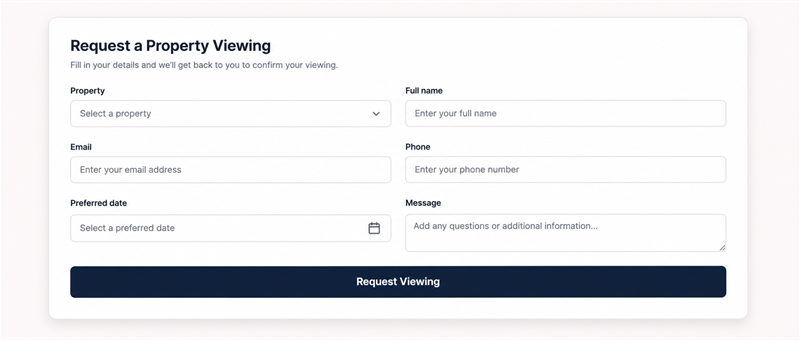
Design the Journey Before the Form
Define the enquiry types your agency receives, who owns each one, your response targets, and the information an agent needs before making contact. Then shape the form and follow-up around that operating process.
Let visitors choose a viewing, property search, valuation, listing, rental, development, or investment enquiry.
Collect location, property type, budget, timeframe, preferred appointment, finance position, and essential requirements.
Assign enquiries by branch, neighbourhood, property type, transaction type, agent availability, or specialist expertise.
Send an immediate acknowledgement with response times, appointment details, and the name or team handling the request.
Record contact attempts, viewing outcomes, property feedback, valuation progress, next action, owner, and follow-up date.
Create Different Paths for Different Clients
A viewing request needs different questions from a seller valuation or landlord enquiry. Conditional forms keep each journey short while giving your team the information needed for a relevant response.
Keep Personal and Financial Details Appropriate
Only request information needed at the current stage. Move identity documents, detailed financial evidence, contracts, and other sensitive records to an approved secure process.
Measure the Workflow
Track first-response time, contact rate, viewing bookings, valuation appointments, qualified leads, instruction rate, and common drop-off points. These signals show where forms, routing, and follow-up need improvement.
Conclusion
A clear enquiry workflow gives clients a faster, more confident experience and gives agents the context and ownership they need to turn website interest into property conversations.
