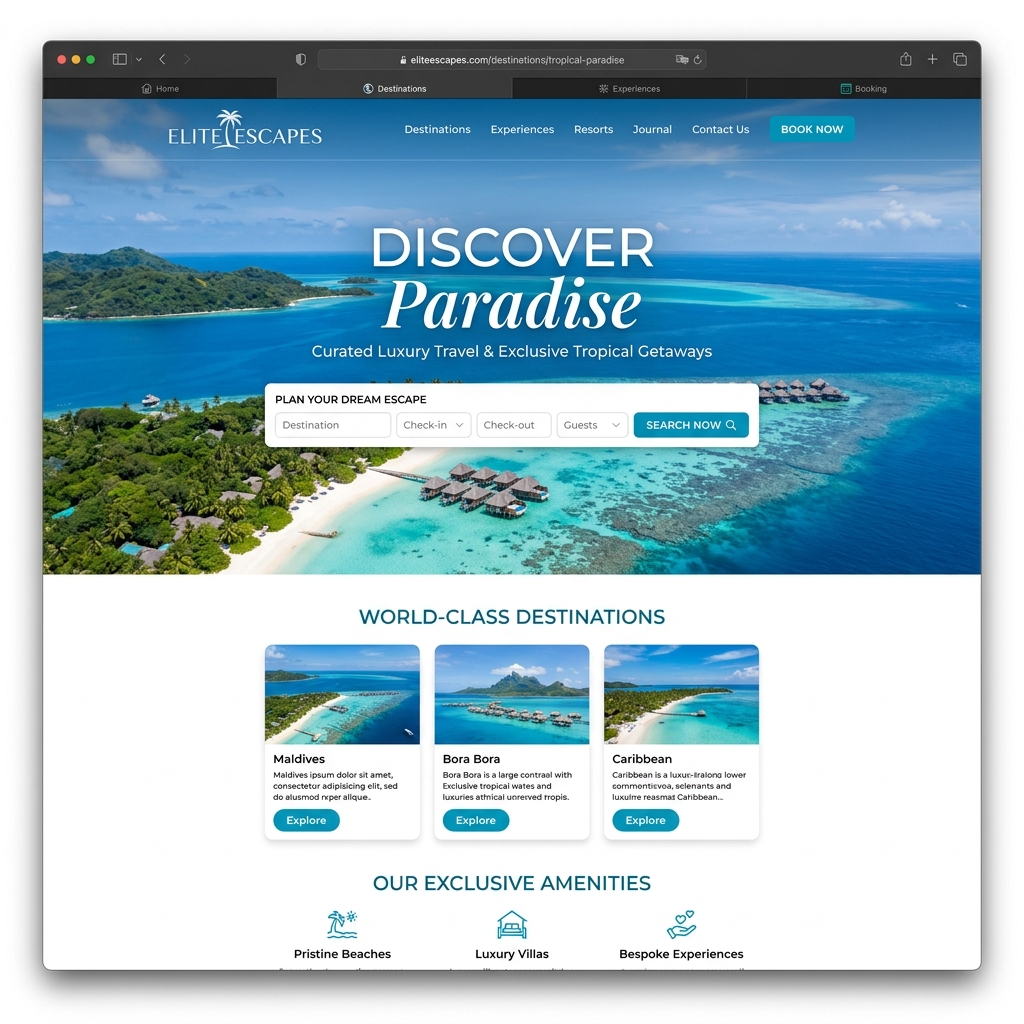
A destination page is often the moment a traveler starts imagining the trip as real. The best pages combine inspiration, practical details, package clarity, and an easy next step so visitors can move from browsing to enquiry without hesitation.

Start With the Promise of the Place
Lead with the feeling travelers are looking for: a quiet beach escape, a culture-rich city break, a family-friendly holiday, a luxury honeymoon, or an adventure itinerary. Your opening section should make the destination easy to understand in seconds.
Use a short destination summary, best travel months, ideal trip length, and a strong visual. This helps visitors quickly decide whether the destination fits their budget, timeline, and travel style.
Make Packages Easy to Compare
Travelers need confidence before they enquire. Show package names, inclusions, exclusions, hotel categories, transfer options, meal plans, guide support, and starting prices where possible. Avoid making visitors hunt for basic details.
Trip Snapshot
Show duration, ideal season, starting price, and best traveler type near the top.
Package Clarity
List inclusions, upgrades, cancellation notes, and customisation options clearly.
Local Highlights
Feature attractions, food, shopping, events, and experiences travelers care about.
Fast Enquiry Path
Keep quote, call-back, WhatsApp, and package enquiry actions visible on the page.
Use Itineraries to Reduce Uncertainty
A sample itinerary helps visitors picture the day-by-day experience. Break it into arrival, sightseeing, leisure time, transfers, meals, and optional add-ons. Keep the structure scannable so travelers can see the shape of the trip quickly.
If your agency offers custom planning, use the itinerary as a starting point rather than a rigid plan. Mention that dates, hotels, activities, and pace can be adjusted based on the traveler.
Add Trust Signals Where Decisions Happen
Trust should sit close to package details and enquiry buttons. Add testimonials, real trip photos, partner badges, support hours, payment guidance, and FAQs about visas, refunds, hotel changes, and travel insurance.
Helpful trust signals for destination pages
Use verified reviews, office contact details, destination expertise, transparent payment steps, support availability, and clear terms. These details reassure visitors before they share personal information or request a quote.
Design for Mobile Travelers
Many travel enquiries begin on mobile. Keep image sizes balanced, headings clear, buttons easy to tap, and package sections short enough to scan. Sticky enquiry buttons can help visitors act when the page is long.
Conclusion
Destination pages work when they inspire the trip and answer the practical questions that block action. With strong visuals, clear packages, sample itineraries, trust signals, and visible enquiry paths, your agency can turn casual browsers into serious travelers.
Ready to build stronger destination pages?
Create a travel agency website with destination pages, package sections, itinerary blocks, and booking enquiry tools.
Get Started