A modern reservation flow should feel fast, reassuring, and complete. Guests want to know when tables are available, what information is needed, how special requests are handled, and what happens after they submit the booking.
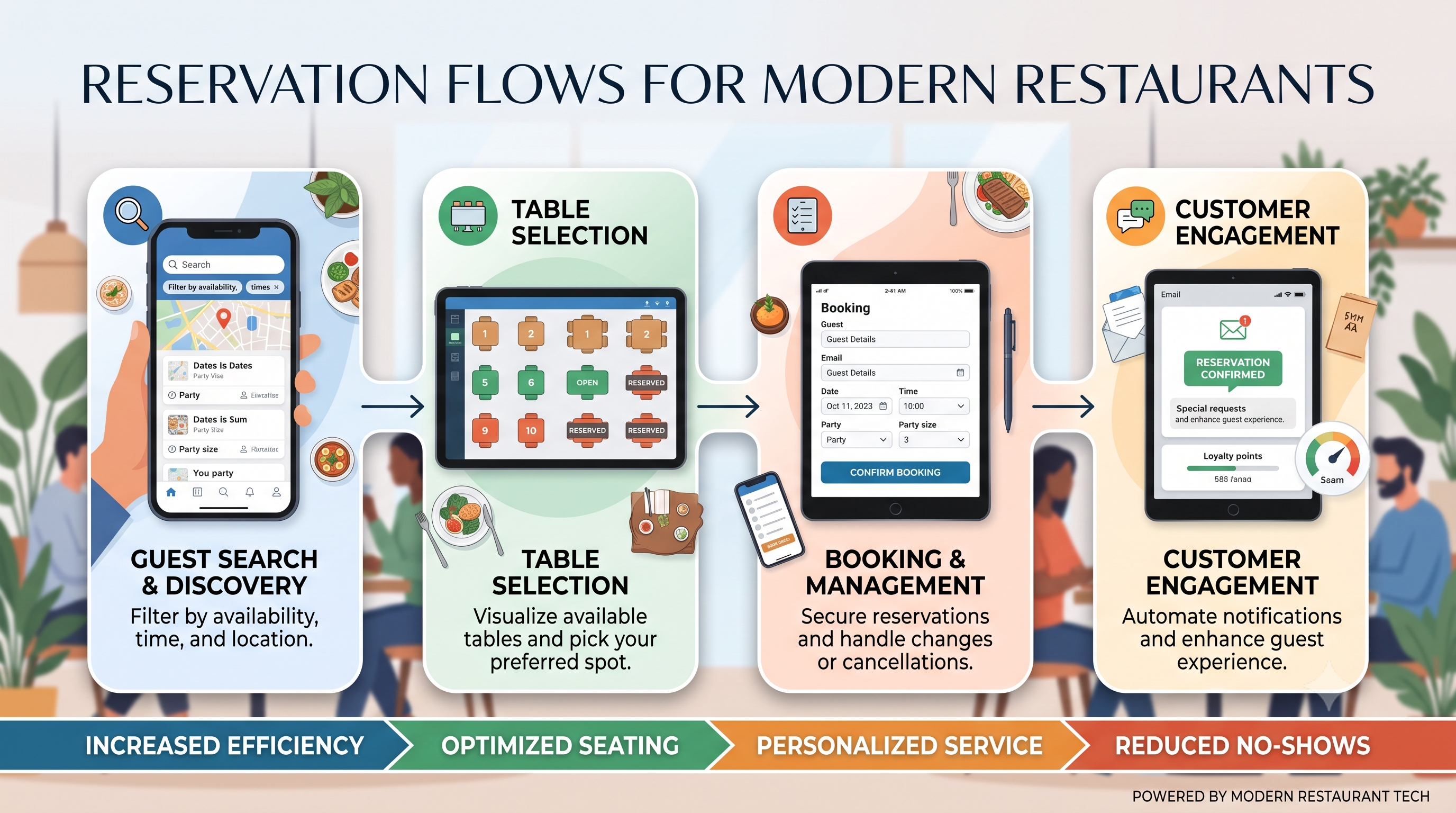
Make Availability the First Decision
The best reservation experiences begin with the details guests already care about: date, time, party size, and dining preference. Do not hide availability behind long forms. Let guests confirm the basics first, then ask for contact information.
Use Fewer Fields, But Better Fields
A reservation form should collect enough information to serve the guest well without turning into a survey. Name, phone, email, party size, date, time, and optional requests are usually enough for a first booking flow.
Design a Flow That Reduces Staff Follow-Up
Restaurants lose time when bookings arrive without useful context. A strong flow captures special occasions, allergies, seating preferences, accessibility needs, and large-party notes in one organized place.
- Choose date and timeHelp guests select a realistic dining window before they enter personal details.
- Confirm party sizeMake seating needs clear for couples, families, groups, and private dining requests.
- Capture contact detailsAsk for the phone and email needed for confirmation or changes.
- Collect guest notesLet guests mention allergies, celebrations, stroller space, accessibility, or seating preferences.
- Show confirmationDisplay a clear success message and explain what happens next.
Set Expectations Before Guests Arrive
Policies do not have to feel harsh. A short note about table hold times, cancellation windows, large-party deposits, dress code, parking, or outdoor seating can prevent confusion. Place these details near the reservation form, not hidden in a footer.
Make Confirmation Messages Useful
A good confirmation message should include the reservation date, time, party size, and next step. Even when the booking requires staff approval, the page should tell guests that their request was received.
Connect Reservations to the Rest of the Website
The reservation flow should connect naturally to menus, private events, gift cards, directions, and contact options. Guests who cannot find the right time may still order online, join a waitlist, call the restaurant, or submit an event inquiry.
Support Mobile Guests First
Many restaurant bookings happen on mobile devices while guests are comparing options. Buttons should be large, forms should be short, date and time fields should be easy to tap, and confirmation text should appear clearly after submission.
Conclusion
Modern reservation flows help guests book confidently and help restaurants operate with fewer gaps. When availability, guest details, policies, and confirmations are organized in one smooth path, the dining experience starts before the first plate reaches the table.
Ready to improve your restaurant booking flow?
Build a food website with reservation forms, menu pages, contact sections, and confirmation experiences that work together.
Get Started for Free